Emotional safety is the cornerstone of any healthy relationship. It goes beyond simply avoiding conflict or keeping the peace. Emotional safety creates an environment where individuals feel truly secure, valued, and understood. When people feel emotionally safe, they are more likely to open up and share their authentic selves, which lays the foundation for trust and deeper connections. On the other hand, the absence of emotional safety can lead to fear, misunderstandings, and unresolved conflicts, slowly eroding bonds among partners, friends, or coworkers. This is why, for couples looking to enhance their emotional connection, taking proactive steps is vital. Albuquerque Therapy Center offers specialized services, including marriage counseling Albuquerque, for those committed to improving their relationships. As a trusted provider in the region, Albuquerque Therapy Center’s mission is to help individuals and couples build stronger, more resilient relationships through a combination of guidance, support, and evidence-based therapeutic techniques.
Understanding Emotional Safety
Emotional safety refers to the sense of security that allows individuals to share their genuine thoughts, feelings, and experiences without worrying about judgment, embarrassment, or adverse consequences. In a supportive environment, people feel comfortable being open and vulnerable, trusting that they will receive empathy instead of criticism. This foundation encourages honest communication, deeper trust, and stronger connections in relationships of all kinds, including romantic partnerships, friendships, family interactions, and professional settings.
In workplaces, emotional safety promotes healthier collaboration, more transparent communication, and mutual respect, ultimately strengthening morale and productivity. When individuals believe their perspectives matter and their well-being is valued, they become more engaged and committed. However, when emotional safety is lacking, people may hesitate to speak openly, leading to misunderstandings and tension. Seeking guidance from professionals, such as those at an Albuquerque therapy center, can help individuals and teams build healthier communication patterns and restore trust and connection.
Benefits of Emotional Safety in Relationships
- Enhanced Communication: When individuals feel safe, they are much more likely to communicate openly, without holding back complicated feelings or opinions. This openness leads to better understanding, fewer misunderstandings, and a stronger foundation of honesty in the relationship.
- Increased Trust: Emotional safety naturally fosters trust because each person knows they can rely on the other for empathy, support, and genuine care. Trust grows as partners consistently respond thoughtfully and respectfully to each other’s needs, reinforcing the belief that they are allies rather than adversaries.
- Greater Intimacy: Feeling safe allows people to be vulnerable about their hopes, fears, and dreams without worrying about being dismissed or embarrassed. This level of vulnerability deepens the emotional connection and intimacy between individuals, creating a supportive partnership built on authenticity and acceptance.
Strategies to Foster Emotional Safety
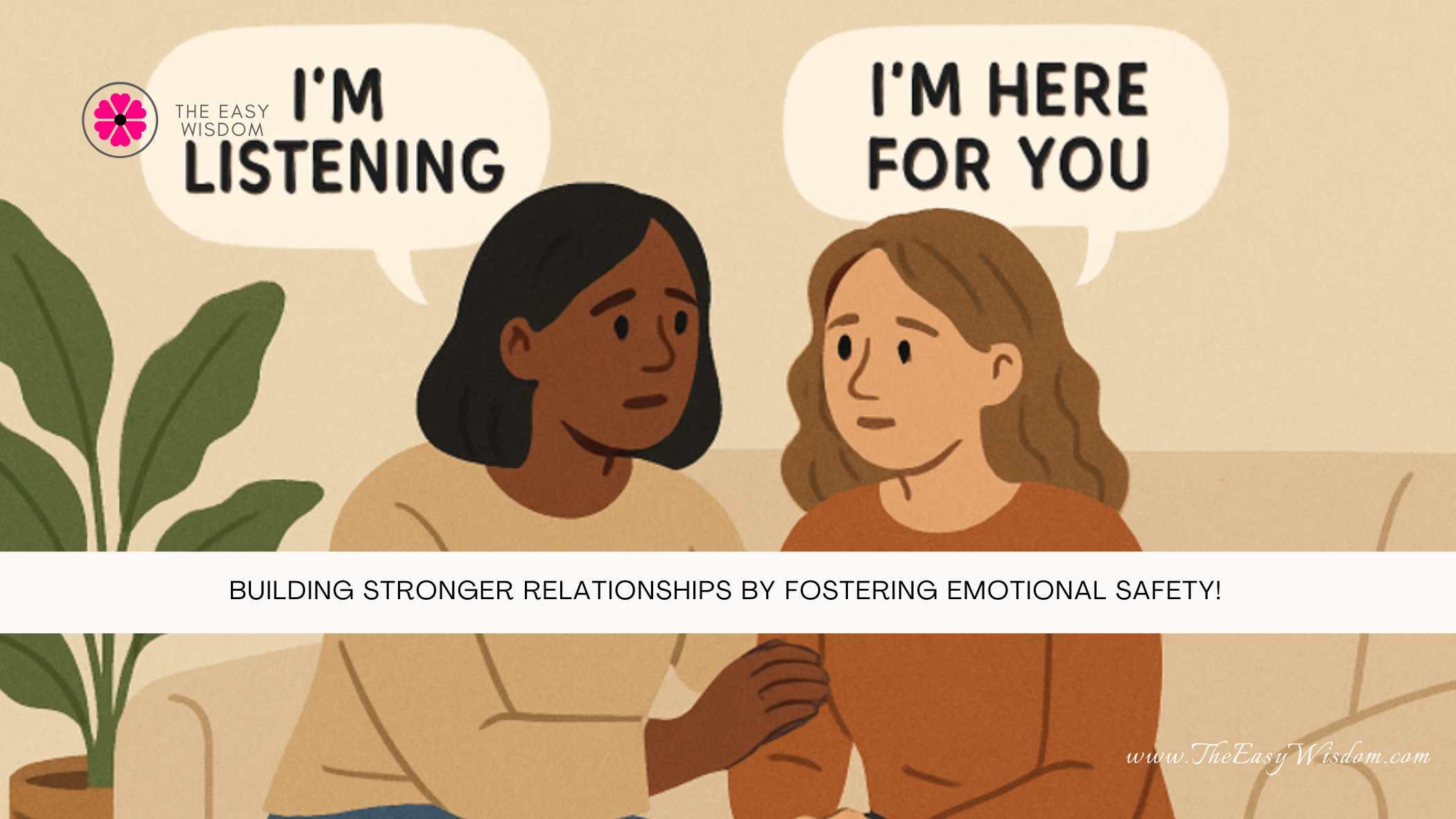
- Active Listening: Practice giving your full attention to your partner or loved one. This means putting away distractions, making eye contact, and truly hearing what the other person has to say. Reflect their feelings and thoughts to show you understand, and avoid interrupting or making assumptions. Thoughtful, attentive listening encourages open sharing and reassures your partner that their voice matters.
- Empathy: Make a sincere effort to understand your partner’s perspective, even when you disagree. Empathy involves imagining how the other person feels, validating those emotions, and responding with kindness rather than judgment. This nurtures a sense of safety, as your partner feels seen and accepted, especially in moments of vulnerability or difficulty.
- Consistent Support: Be a reliable source of encouragement and support. Show that you are there for your partner, not only when things are going well but also during challenging times. Consistency in your words and actions builds confidence in the relationship, demonstrating that you can be depended on through both joy and hardship.
- Respect Boundaries: Everyone has different comfort levels with personal space, time, and self-disclosure. Recognize and honor these boundaries, checking in regularly to ensure that each person’s needs are being respected. Respecting boundaries prevents resentment and fosters a sense of safety, allowing both people to thrive individually and as a team.
Role of Professional Support
Occasionally, even the most committed couples may find it challenging to create or maintain emotional safety on their own. Long-standing patterns, past traumas, or communication barriers can be complex to overcome without structured guidance. In such cases, seeking help from an experienced therapist can make a meaningful difference. A professional can help identify underlying issues, teach effective communication strategies, and provide a safe space for both partners to explore their thoughts and feelings. Albuquerque Therapy Center offers compassionate therapy, including couples counseling, to help couples navigate these challenges. Their skilled therapists specialize in fostering emotional safety, rebuilding trust after it has been damaged, and strengthening the overall emotional connection between partners. Therapy is a proactive step toward personal growth and relationship wellness, and it can empower couples to develop stronger, healthier bonds both now and in the future.
Emotional Safety in the Workplace
Emotional safety isn’t just crucial in personal relationships; it is equally vital in the workplace. Promoting a culture of psychological safety encourages employees to voice their ideas, ask questions, and raise concerns without fear of negative repercussions. A study highlighted by Social Current emphasizes that psychological safety is directly linked to better collaboration, creativity, and employee well-being. When teams have strong, authentic relationships, members are more willing to take calculated risks, innovate, and support each other’s professional and personal growth. Organizations that invest in emotional safety are more likely to foster inclusivity, reduce turnover, and boost overall productivity. Creating an emotionally safe work environment involves clear communication, transparent leadership, consistent recognition of contributions, and support for employee wellness. Ultimately, prioritizing emotional safety benefits not only individuals but also the entire organization, leading to a more harmonious, engaged, and resilient workplace culture.
Also Read: How To Practice Gratitude in The Workplace?
Challenges in Establishing Emotional Safety
Building emotional safety is a dynamic process that often requires consistent effort, patience, and resilience. For some, past experiences of betrayal, conflict, or unresolved trauma can create barriers to trust and open communication. Deeply ingrained habits, such as avoiding difficult conversations or using sarcasm as a defense mechanism, can make it difficult for emotional safety to take root. Recognizing these challenges is an essential first step. Addressing them may involve honest self-reflection, ongoing dialogue with loved ones, and a willingness to adapt and grow together. Engaging in relationship-building activities, setting aside dedicated time for meaningful conversation, and seeking professional guidance when needed are all valuable ways to foster a stronger sense of safety and connection. With kindness, persistence, and the willingness to learn from setbacks, couples and teams can gradually overcome these obstacles and cultivate an environment where emotional safety thrives.
Fostering emotional safety is essential for building and maintaining strong, healthy relationships both at home and in the workplace. By practicing active listening, empathy, support, and respect for boundaries, individuals can create spaces where trust, authenticity, and intimacy can flourish. While challenges may arise along the way, it’s important to remember that emotional safety is a skill that can be developed with intention and practice. When needed, seeking support from professionals, such as those at Albuquerque Therapy Center, can offer vital tools and guidance for navigating the complexities of human relationships. Prioritizing emotional safety not only strengthens existing bonds but also empowers people to approach life with greater confidence, resilience, and joy.