


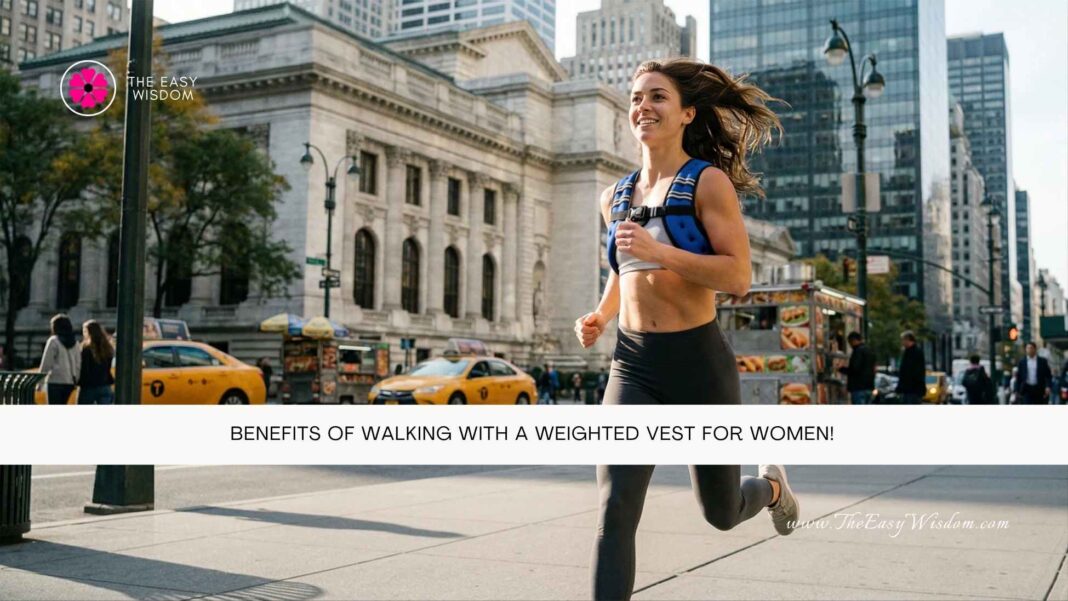
Walking is widely celebrated as one of the most sustainable, accessible, and enjoyable forms of physical activity. It boosts mood, supports heart health, and requires minimal gear beyond a supportive pair of shoes. However, as women transition through different life stages—from their 20s and 30s through perimenopause and beyond—body composition changes, natural muscle mass declines, and bone density maintenance becomes a top medical priority.
Enter the weighted vest. By adding a small, evenly distributed load across your upper body while walking, you elevate a simple daily stroll into a low-impact resistance training session. Unlike holding dumbbells or wearing ankle weights, which alter your natural gait and put unnecessary torque on small joints, a properly fitted weighted vest centers the extra mass over your midline.
Here is an in-depth breakdown of the science-backed benefits, anatomical advantages, and practical strategies for integrating weighted walking into your weekly routine.
The Unique Health Advantages of Weighted Walking for Women
1. Preserving and Building Bone Density
Bone health is arguably the single most critical reason women should consider weight-bearing exercise. Beginning in a woman’s early 30s, natural bone remodeling slows down, and bone mineral density begins a gradual decline. This process accelerates sharply during perimenopause and menopause due to falling estrogen levels, significantly increasing the risk of osteopenia and osteoporosis.
Bones respond directly to physical stress—a phenomenon known as Mechanostat Theory (or Wolff’s Law). When mechanical load is placed on the skeletal frame, bone tissue receives signals to remodel and strengthen. Standard walking provides ground impact, but over time, your body adapts to your baseline mass. Adding 5% to 10% of your body weight via a vest provides the exact additional stimulus needed to trigger osteoblast (bone-building cell) activity in the hips, lumbar spine, and femur without subjecting your joints to high-impact pounding.
2. Increasing Caloric Burn Without Joint Stress
Running and high-intensity interval training (HIIT) are classic go-to methods for cardiovascular efficiency and weight management. However, the repetitive ground reaction force of running delivers three to four times your body weight in force through your knees, ankles, and lower back with every footfall. For many women, this causes joint inflammation, pelvic floor strain, or overuse injuries.
Walking with a weighted vest for weight loss increases energy expenditure by 12% to 20% compared to unweighted walking at the same pace. The extra weight forces your cardiovascular system and working muscles to exert more energy per step. You get the metabolic and fat-burning benefits of a much more intense cardio session without subjecting your cartilage and ligaments to heavy joint impact.
3. Core Activation and Posture Correction
Modern life often keeps us slouched over desks, smartphones, and steering wheels. This forward-head posture weakens the upper back muscles, tightens the thoracic spine, and deactivates deep core stabilizers.
When you wear a weighted vest, your center of gravity naturally shifts slightly forward. To stay upright, your postural muscles—specifically the erector spinae, rhomboids, rear deltoids, and deep abdominal wall—must continuously engage to keep your thorax aligned over your hips. This acts as a real-time postural cue, strengthening the posterior chain and retraining your body to maintain an upright position even when the vest comes off.
4. Enhancing Cardiovascular Endurance and VO2 Max
VO2 max—the maximum amount of oxygen your body can utilize during exercise—is one of the strongest indicators of long-term cardiovascular health and longevity. Standard brisk walking typically maintains baseline aerobic fitness, but it rarely pushes your heart rate high enough to significantly expand your aerobic ceiling.
Walking with extra weight elevates your heart rate into Zone 2 and lower Zone 3 training thresholds. This increases stroke volume (the amount of blood your heart pumps per beat) and forces your lungs to work harder, improving overall endurance without leaving you thoroughly exhausted.
5. Supporting Hormonal and Metabolic Health
Hormonal shifts throughout a woman’s life can lead to insulin resistance, metabolic slowing, and loss of lean muscle tissue. Strength-based loading through a weighted vest encourages blood sugar clearance into muscle tissue, improving insulin sensitivity. Additionally, because weighted walking recruits larger motor units in the glutes, quadriceps, and hamstrings, it helps preserve lean muscle mass during weight loss phases.
How to Choose and Wear the Right Weighted Vest
Not all weighted vests are created equal, and women face unique ergonomic considerations regarding chest pressure and hip fit.
Finding the Ideal Weight Range
A common mistake is starting with too much weight. A heavy vest can cause you to lean forward excessively, straining your lower back.
- Beginners: Start with 3% to 5% of your total body weight (e.g., a 150 lb woman should start with a 4.5 lb to 7.5 lb vest).
- Intermediate / Advanced: Gradually progress to 8% to 10% of your body weight as your back and core strength adapt.
Safety Tip: Going beyond 10% to 15% of body weight during long walks is rarely necessary and can shift the force load onto your lumbar spine and Achilles tendons. Focus on distance or incline rather than endlessly adding weight.
Ergonomic Fit for Female Anatomy
When shopping for a vest, look for models specifically tailored for women or featuring adjustable chest straps:
- Short-Torso Cut: Look for a vest that sits high on the chest and finishes above the natural waistline. This prevents the vest from bouncing against your pelvis or hips while walking.
- X-Shape or Contoured Fronts: Women-specific designs feature contoured chest straps or an X-shaped harness to avoid uncomfortable pressure on breast tissue.
- Balanced Weight Distribution: Ensure the vest holds weight evenly in both front and back pockets. Uneven weight causes compensation patterns in your shoulders and spine.
Safe Progression and Best Practices
To get the absolute most out of your weighted walks while avoiding strain, follow these foundational rules:
- Maintain Proper Walking Form: Keep your head up, chin parallel to the ground, shoulders relaxed away from your ears, and swing your arms naturally. Avoid leaning forward at the hips.
- Start Small with Duration: Begin with a 20-minute walk twice a week on flat surfaces. Once your legs and back feel comfortable, gradually build up to 35–45 minutes, three to four times a week.
- Incorporate Elevation: Once walking on flat ground feels easy with your vest, add mild inclines or hills. Walking uphill with a vest heavily recruits the glutes and hamstrings, creating a powerful lower-body workout.
- Listen to Your Joints: If you experience any sharp pain in your lower back, hips, or knees, remove the vest immediately. Muscle fatigue is expected, but joint discomfort is a signal to decrease the load or duration.
Final Thoughts: Building Low-Impact Strength
Walking with a weighted vest is one of the most effective, scalable ways for women to build resilience, protect bone density, burn calories, and sharpen posture. By simply strapping on a light load before heading out the door, you convert an ordinary walk into an intentional, highly productive full-body workout. Start light, prioritize good posture, and let the extra load work for you!